Elevate Your Space: Infusing Spiritual Serenity with Mandala Designs
In today's fast-paced world, creating a sanctuary within your home has become more important than ever. The spaces we inhabit directly influence our mental well-being, emotional stability, and spiritual growth. One of the most effective ways to transform your environment into a haven of peace and tranquility is through the incorporation of mandala designs. These ancient, sacred geometric patterns have been used for centuries across various cultures to promote healing, meditation, and spiritual awakening. At DeclanHarper, we believe that your living space should be a reflection of your inner self, a place where you can retreat from the chaos of daily life and reconnect with your spiritual essence.
Mandala designs offer a unique blend of aesthetic beauty and profound spiritual significance. Whether you're a seasoned meditation practitioner or someone just beginning to explore mindfulness and spiritual practices, integrating mandalas into your home decor can create an atmosphere that supports your journey toward inner peace and self-discovery. This comprehensive guide will explore how you can elevate your space through the thoughtful incorporation of mandala designs, transforming your home into a sanctuary of spiritual serenity.
Understanding Mandalas: Ancient Wisdom Meets Modern Living
The Origins and Spiritual Significance of Mandalas
The word mandala comes from Sanskrit, meaning circle or completion. These intricate geometric patterns have their roots in Hindu and Buddhist traditions, where they serve as spiritual and ritual symbols representing the universe, wholeness, and the infinite nature of existence. In Hinduism, mandalas are used as meditation tools and are believed to represent the cosmos and the divine. In Buddhism, they symbolize enlightenment and the path to spiritual awakening.
The creation and contemplation of mandalas have been central to spiritual practices for thousands of years. Monks and spiritual practitioners would spend hours creating these intricate designs by hand, viewing the process itself as a form of meditation. Each element within a mandala holds specific meaning: the center represents the divine or the self, the geometric patterns symbolize the structure of the universe, and the outer circles represent the boundary between the inner and outer worlds.
What makes mandalas particularly powerful is their universal appeal. While rooted in Eastern traditions, the geometric harmony and spiritual resonance of mandalas have transcended cultural boundaries, finding relevance and meaning in contemporary Western spirituality. Today, mandalas are recognized globally as symbols of balance, harmony, and spiritual growth, making them perfect elements for creating a serene living environment.
The Psychology Behind Mandala Designs
Beyond their spiritual significance, mandalas have a profound psychological impact on the human mind. The symmetrical, circular nature of mandala designs naturally draws the eye toward the center, creating a focal point that encourages mental focus and concentration. This quality makes mandalas particularly effective for meditation and mindfulness practices.
Research in psychology has shown that exposure to symmetrical patterns and circular designs can reduce stress and anxiety. The repetitive, orderly nature of mandala patterns has a calming effect on the nervous system, helping to lower cortisol levels and promote a sense of well-being. When you gaze upon a mandala, your mind naturally begins to slow down, your breathing becomes more regulated, and your body enters a more relaxed state.
Furthermore, mandalas engage both hemispheres of the brain. The geometric precision appeals to the logical, analytical left hemisphere, while the artistic and intuitive elements engage the creative right hemisphere. This balanced activation promotes mental clarity, emotional stability, and a sense of wholeness. By incorporating mandalas into your living space, you're essentially creating an environment that naturally supports mental health and emotional well-being.
Choosing the Right Mandala Designs for Your Space
Identifying Your Spiritual Preferences
Before incorporating mandala designs into your home, it's important to consider your personal spiritual preferences and the energy you wish to cultivate in your space. Different mandala designs carry different vibrational frequencies and spiritual meanings. Some mandalas are designed to promote healing and restoration, while others are meant to inspire creativity, abundance, or spiritual growth.
If you're drawn to healing and emotional balance, look for mandalas featuring soft, flowing patterns with predominantly cool colors like blues, purples, and greens. These designs are particularly effective in bedrooms and meditation spaces. If you're seeking to enhance creativity and motivation, consider mandalas with warmer tones like oranges, reds, and yellows, which are better suited for creative spaces like studios or home offices.
Take time to meditate on different mandala designs and notice which ones resonate most deeply with you. Your intuitive response to a particular mandala is often a reliable indicator of which designs will best serve your spiritual journey. Trust your instincts and choose designs that make you feel uplifted, centered, and connected to something greater than yourself.
Color Psychology in Mandala Design
Color plays a crucial role in the spiritual and psychological impact of mandala designs. Each color carries its own vibrational frequency and spiritual significance. Understanding color psychology can help you select mandalas that align with your intentions and the energy you wish to cultivate in your space.
Red and orange mandalas are associated with vitality, passion, and creative energy. These warm colors stimulate the root and sacral chakras, promoting grounding and creative expression. They're ideal for living rooms, creative spaces, or areas where you want to encourage activity and engagement.
Yellow and gold mandalas represent joy, optimism, and spiritual enlightenment. These colors are associated with the solar plexus chakra and promote confidence, clarity, and mental focus. They work beautifully in home offices, study areas, or any space where you want to enhance productivity and positive thinking.
Green mandalas symbolize healing, growth, and renewal. Associated with the heart chakra, green promotes compassion, balance, and emotional healing. These designs are perfect for bedrooms, living rooms, or any space dedicated to rest and emotional well-being.
Blue mandalas represent communication, truth, and spiritual awareness. Associated with the throat and third eye chakras, blue promotes clarity of thought and spiritual insight. These designs are excellent for meditation spaces, home offices, or areas where you engage in creative or intellectual pursuits.
Purple and indigo mandalas are associated with spiritual transformation, intuition, and higher consciousness. These colors activate the third eye and crown chakras, promoting spiritual awakening and deep meditation. They're ideal for meditation rooms, bedrooms, or any sacred space dedicated to spiritual practice.
Incorporating Mandalas into Different Rooms
Creating a Sacred Meditation Space
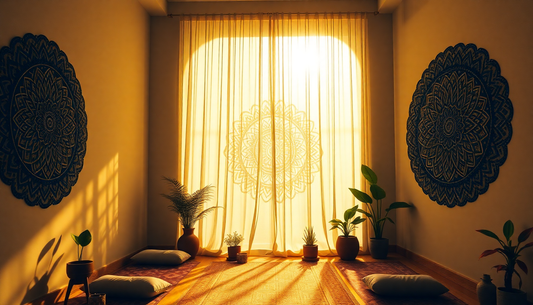
A dedicated meditation space is one of the most powerful ways to integrate mandala designs into your home. This space should be a sanctuary where you can retreat for quiet reflection, meditation, and spiritual practice. Begin by selecting a quiet corner or room in your home where you won't be disturbed. This could be a spare bedroom, a corner of your living room, or even a closet that you've transformed into a meditation nook.
The centerpiece of your meditation space should be a large mandala design. This could be a framed print, a tapestry, or a painted mural on the wall. Position it at eye level so that when you sit in meditation, the mandala naturally becomes your focal point. The mandala will serve as a visual anchor for your meditation practice, helping to keep your mind focused and centered.
Complement your primary mandala with additional elements that enhance the spiritual atmosphere. Consider adding smaller mandala designs on side tables, shelves, or as part of a meditation altar. You might also incorporate mandala-patterned cushions or blankets to make your meditation space more comfortable and inviting.
Lighting is crucial in a meditation space. Soft, warm lighting creates a more conducive environment for spiritual practice. Consider using candles, salt lamps, or dimmable lights that allow you to adjust the brightness to suit your mood. The gentle glow of candlelight combined with mandala designs creates an atmosphere of profound peace and spiritual connection.
Transforming Your Bedroom into a Sanctuary
Your bedroom should be a place of rest, rejuvenation, and spiritual renewal. Incorporating mandala designs into your bedroom can create an environment that promotes deep sleep, peaceful dreams, and spiritual restoration. The key is to choose designs and colors that evoke calm and tranquility.
Consider placing a large mandala tapestry or print above your bed as a focal point. This creates a beautiful visual anchor that you see as you drift off to sleep and when you wake. Choose mandalas in soft, cool colors like blues, purples, or greens to promote relaxation and peaceful sleep.
You can also incorporate mandala designs through bedding. Mandala-patterned duvet covers, pillowcases, and throw blankets add both aesthetic appeal and spiritual energy to your sleeping space. These functional pieces allow you to surround yourself with mandala energy throughout the night.
Wall art is another effective way to integrate mandalas into your bedroom. Create a gallery wall featuring several mandala prints in complementary colors and styles. This creates visual interest while maintaining the peaceful, spiritual atmosphere you're cultivating. Alternatively, a single large mandala print can serve as a powerful focal point that anchors the entire room's energy.
Consider the placement of your mandala designs carefully. Avoid placing them directly opposite your bed if they're too stimulating, as this might interfere with sleep. Instead, position them on side walls or at angles where they create a sense of balance and harmony without being overly prominent.
Enhancing Your Living Room with Mandala Energy
Your living room is often the heart of your home, a space where family and guests gather. Incorporating mandala designs here creates an atmosphere of harmony and spiritual balance that benefits everyone who enters the space. The key is to integrate mandalas in ways that feel natural and aesthetically pleasing while maintaining the room's functionality.
A large mandala tapestry or print can serve as a stunning focal point in your living room. Consider hanging it above your sofa or fireplace, where it naturally draws the eye and creates a sense of balance in the room. Choose designs and colors that complement your existing decor while introducing the spiritual energy you wish to cultivate.
Mandala-patterned throw pillows are an excellent way to introduce mandala designs without overwhelming the space. Arrange them on your sofa or chairs to create visual interest and comfort. These functional pieces allow guests to experience the calming energy of mandalas while maintaining the room's practical purpose.
Coffee table books featuring mandala art and design can serve as both decorative elements and sources of inspiration. These books invite contemplation and conversation, making them perfect additions to a living room. You might also display mandala-themed objects like decorative bowls, sculptures, or crystals on shelves or side tables.
Wall art arrangements featuring multiple mandala prints in complementary frames create a sophisticated gallery wall that elevates your living room's aesthetic. Mix different sizes and styles to create visual interest while maintaining a cohesive spiritual theme. This approach allows you to express your personal style while infusing the space with mandala energy.
Inspiring Creativity in Your Home Office or Studio
If you work from home or have a creative space, mandala designs can enhance focus, creativity, and productivity. The geometric precision and spiritual energy of mandalas create an environment that supports both analytical thinking and creative inspiration.
Position a mandala print or tapestry where you can see it during your work. This serves as a visual reminder to stay centered and focused on your intentions. Choose mandalas in colors that promote the type of work you do. Warm colors like orange and yellow enhance creativity and motivation, while cool colors like blue promote clarity and focus.
Mandala-patterned desk accessories like mouse pads, desk organizers, or pen holders introduce subtle mandala energy into your workspace. These functional items keep you connected to the spiritual significance of mandalas throughout your workday without creating visual clutter.
Consider creating a vision board that incorporates mandala designs alongside images and words that represent your professional goals and aspirations. This combines the spiritual power of mandalas with your personal intentions, creating a powerful tool for manifestation and success.
A small mandala sculpture or crystal grid arranged in a mandala pattern on your desk or shelf creates a focal point that promotes concentration and spiritual alignment. These elements serve as reminders to pause, breathe, and reconnect with your purpose throughout your workday.
Bringing Mandala Energy to Your Bathroom
Your bathroom is a space of cleansing and renewal, making it an ideal location for mandala designs that promote healing and restoration. Even small touches of mandala energy can transform your bathroom into a spa-like sanctuary.
A mandala print or tapestry on the bathroom wall creates a focal point that encourages mindfulness during your daily routines. Choose designs in soft, calming colors that promote relaxation and self-care. This simple addition transforms an ordinary bathroom into a space of spiritual renewal.
Mandala-patterned towels, bath mats, and shower curtains introduce mandala energy in functional ways. These items surround you during your bathing and grooming routines, creating an atmosphere of care and spiritual attention to your physical body.
A small mandala sculpture or decorative object on your bathroom counter serves as a reminder to approach self-care with mindfulness and intention. This could be a mandala-shaped soap, a decorative mandala stone, or a small framed print.
Consider incorporating mandala designs into your bathroom mirror area. A mandala-framed mirror or mandala-patterned mirror surround creates a beautiful focal point that encourages self-reflection and self-appreciation. This transforms your mirror from a purely functional object into a spiritual tool that supports self-love and acceptance.
Mandala Design Styles and Formats
Wall Art and Prints
Mandala prints are among the most accessible and versatile ways to incorporate mandala designs into your home. Available in countless styles, colors, and sizes, mandala prints can be framed and hung on any wall, creating instant focal points that transform your space.
When selecting mandala prints, consider the size of your wall and the room's overall aesthetic. Large prints make bold statements and work well as primary focal points, while smaller prints can be grouped together to create gallery walls. The frame you choose is equally important, as it should complement both the mandala design and your room's decor.
Digital prints offer affordability and variety, allowing you to choose from thousands of designs. Canvas prints provide a more textured, artistic appearance and often feel more substantial than paper prints. Fine art prints on high-quality paper offer superior color reproduction and longevity, making them ideal for designs you plan to keep for many years.
Tapestries and Textiles
Mandala tapestries are large fabric pieces featuring mandala designs that can be hung on walls, draped over furniture, or used as room dividers. These versatile pieces add texture, color, and spiritual energy to any space. Tapestries are particularly effective in creating dramatic focal points and can completely transform the atmosphere of a room.
The beauty of tapestries lies in their flexibility. You can change them seasonally, move them between rooms, or layer them with other textiles to create different moods. Mandala tapestries in cotton, polyester, or silk blends offer different textures and aesthetic qualities, allowing you to choose based on your preferences and budget.
Beyond wall hangings, mandala-patterned textiles extend to bedding, throw blankets, cushion covers, and curtains. These functional pieces allow you to surround yourself with mandala energy throughout your home while maintaining practical utility. Mixing and matching different mandala patterns and colors creates visual interest and allows you to express your personal style.
Three-Dimensional Mandala Art
Three-dimensional mandala art adds depth and visual interest to your space. Mandala sculptures, carved wooden pieces, and metal mandala wall art create shadows and light play that bring mandalas to life in ways that flat prints cannot.
Wooden mandala wall art offers natural warmth and organic beauty. These pieces often feature intricate carved details that create stunning shadow patterns when illuminated by natural or artificial light. They work beautifully in any room and complement both traditional and contemporary decor styles.
Metal mandala wall art, often made from copper, brass, or steel, creates a more modern aesthetic while maintaining spiritual significance. These pieces often feature geometric precision and can be quite striking as focal points. They work particularly well in contemporary or eclectic spaces.
Mandala sculptures and decorative objects can be displayed on shelves, tables, or altars. These three-dimensional pieces invite tactile interaction and create visual interest from multiple angles. Mandala sculptures made from stone, crystal, wood, or metal each offer unique aesthetic and energetic qualities.
Painted Mandala Murals
For those seeking a more permanent and dramatic integration of mandala designs, painted murals offer an opportunity to create a truly transformative focal point. A mandala mural can cover an entire wall or be a smaller accent piece, depending on your vision and space.
Mandala murals can be professionally painted or created through DIY projects if you're artistically inclined. Professional muralists can create custom designs that perfectly match your color scheme and spiritual intentions. DIY mandala murals allow for personal expression and the meditative process of creating the design yourself.
When planning a mandala mural, consider the room's lighting, color scheme, and the mood you wish to create. A large mandala mural in your meditation space creates an immersive spiritual environment. A smaller accent mural in your bedroom or living room adds visual interest without overwhelming the space.
The Spiritual Practice of Creating Mandalas
The Meditative Art of Mandala Creation
Beyond displaying mandalas in your home, creating mandalas yourself offers profound spiritual and therapeutic benefits. The process of creating a mandala is itself a meditation, a practice that quiets the mind, centers the spirit, and promotes healing and self-discovery.
Creating mandalas can be as simple or as complex as you wish. You might begin with a basic circular template and add geometric patterns, or you might freehand an entirely original design. The medium is equally flexible: colored pencils, markers, pa